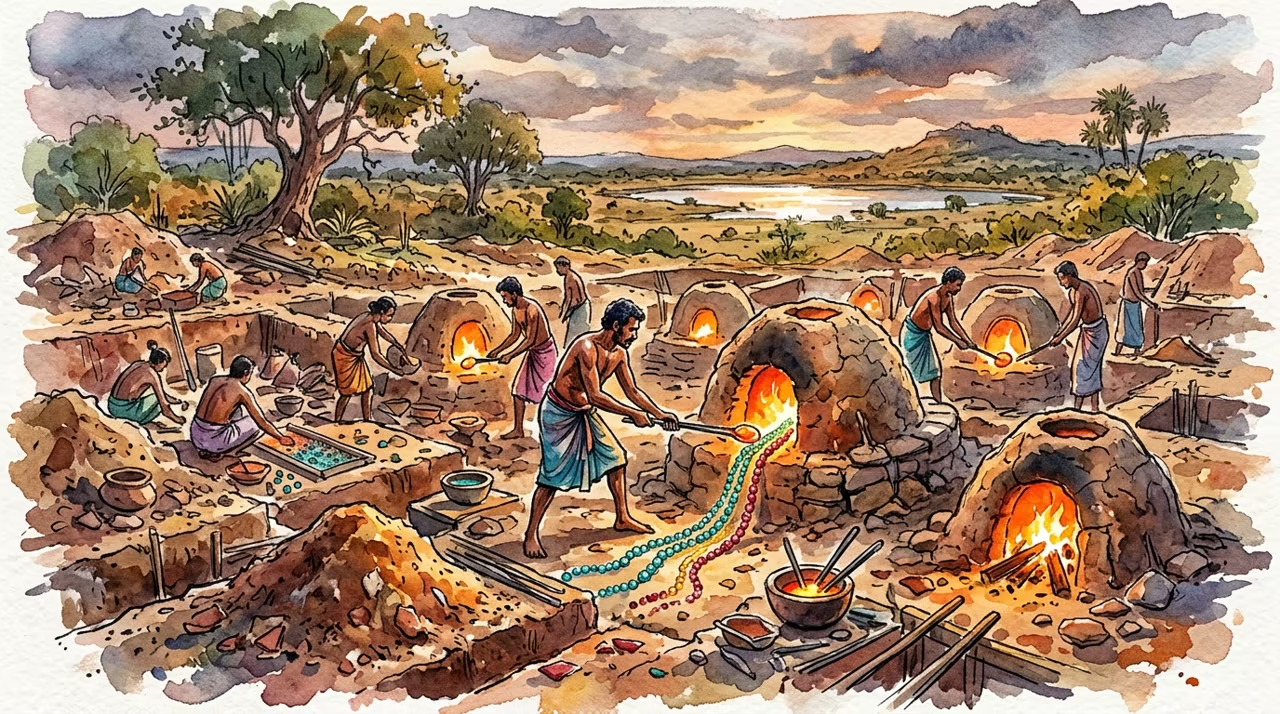
In 2025, groundbreaking archaeological excavations and archaeometric studies confirmed that the Pabalugala (“Pearl Rock”) reserve in Giribawa, Kurunegala District, was home to a massive ancient industrial glassmaking complex. Spanning over 12 acres, the site uncovered remains of more than 50 specialized semi-circular draft furnaces capable of sustaining smelting temperatures up to 1,200°C. Using local quartz, silica, and proprietary flux recipes, ancient Sri Lankan pyrotechnologists melted raw minerals into molten glass, drew fine tubes, and tumbled them in hot ash to produce millions of uniform “Indo-Pacific” monochrome glass beads in vibrant shades of ruby red, bright yellow, turquoise, and green.
Chemical and isotopic fingerprinting proved that these Giribawa-manufactured glass beads were transported along inland river networks to royal and monastic centers in Anuradhapura and the great international seaport of Mantai (Mahatittha). From these harbors, the beads traveled across the Indian Ocean Maritime Silk Route, with matching chemical signatures discovered in ancient port settlements in Egypt and along the East African coast of Tanzania. This discovery rewrites historical understanding, demonstrating that ancient Sri Lanka was an advanced center of high-temperature industrial manufacturing and maritime global trade.