The death of King Vira Narendrasinha in 1739 AD marked the end of the Sinhalese royal line. As he had no heir, the throne passed to his brother-in-law, Sri Vijaya Rajasinha, a prince from the Nayak dynasty of Madurai in South India. This marked the beginning of the Nayak rule in Kandy, which would last until the fall of the kingdom in 1815.
A New Lineage
The Nayak kings were of Telugu origin and were Hindus by birth. However, upon ascending the Kandyan throne, they embraced Buddhism and adopted Sinhalese names and customs. This was crucial for maintaining their legitimacy in the eyes of their subjects and the powerful Buddhist clergy.
Cultural Synthesis
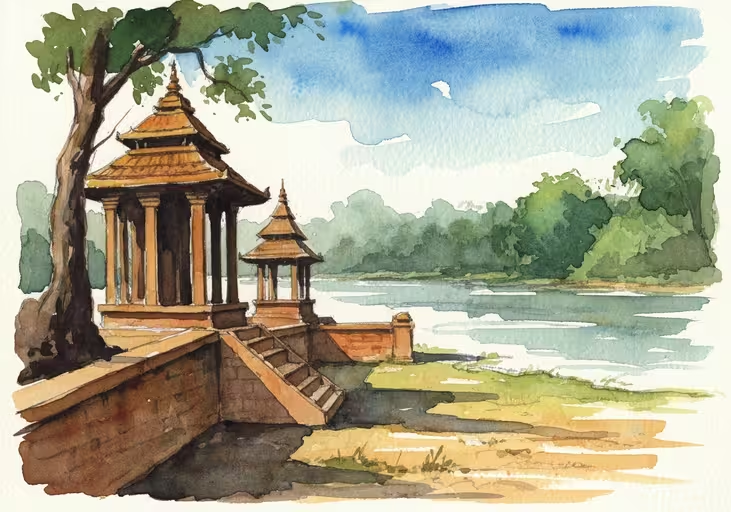
The Nayak period was a time of interesting cultural synthesis. While the kings promoted Buddhism and built temples, they also introduced elements of South Indian culture, art, and music to the Kandyan court. The architecture of the period reflects this blend of Sinhalese and Dravidian styles.
The Last Kings
The dynasty produced four kings: Sri Vijaya Rajasinha, Kirti Sri Rajasinha, Rajadhi Rajasinha, and Sri Vikrama Rajasinha. Kirti Sri Rajasinha is particularly remembered for his role in reviving Buddhism and establishing the Siam Nikaya. The last king, Sri Vikrama Rajasinha, was deposed by the British in 1815, ending the dynasty and the independence of Kandy.