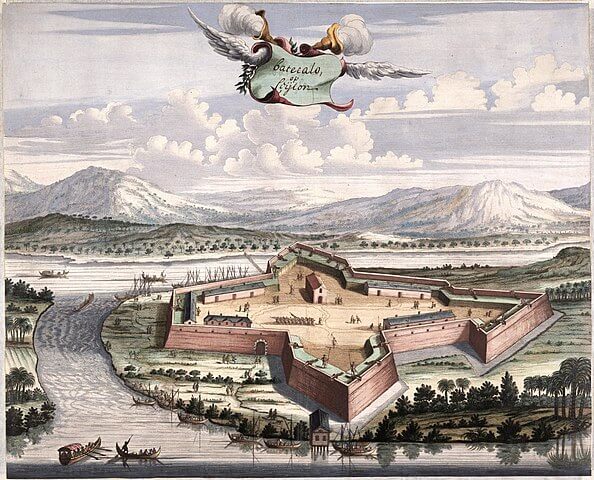
The Dutch Colonial Period (1656–1796 AD) began with the expulsion of the Portuguese. The Dutch East India Company (VOC) took control of the coastal areas, primarily to secure the lucrative cinnamon trade. Unlike the Portuguese, who were driven by religious zeal, the Dutch were motivated by profit.
The VOC Administration
The Dutch introduced a more organized administrative system. They divided their territory into three commanderies: Colombo, Galle, and Jaffna. They also codified the customary laws of the land, such as the Thesavalamai law of Jaffna, and introduced Roman-Dutch law, which remains a part of Sri Lanka’s legal system today.
Trade and Economy
The economy under the Dutch was centered on the monopoly of cinnamon. They also developed the cultivation of other crops like pepper, cardamom, and coffee. To facilitate trade, they built an extensive network of canals, particularly in the western province, which are still in use.
A Lasting Legacy
The Dutch left a significant imprint on Sri Lankan society. The “Burghers,” descendants of Dutch settlers, form a distinct community. Dutch architecture, characterized by forts, churches, and houses with large verandas, can still be seen in Galle and Colombo. The Dutch also introduced new culinary traditions, such as lamprais and kokis.