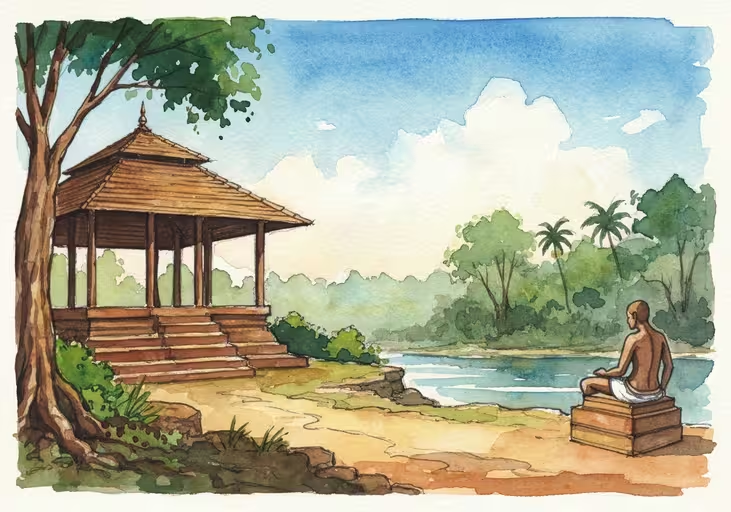
The Kingdom of Kandy, known locally as Maha Nuwara (The Great City), was established in the late 15th century as a semi-independent state under the suzerainty of the Kotte Kingdom. Its founder, Sena Sammatha Wickramabahu (1473–1511 AD), chose the city of Senkadagalapura (Kandy) as his capital, laying the foundation for what would become the last independent monarchy of Sri Lanka.
The Hill Capital
Kandy’s location in the central highlands provided it with natural fortifications. Surrounded by mountains and the Mahaweli River, the city was difficult to access, making it an ideal stronghold against foreign invaders. This geographic advantage would prove crucial in the centuries to come.
Independence from Kotte
Initially a vassal state, Kandy gradually asserted its independence as the power of the Kotte Kingdom waned. By the early 16th century, it had emerged as a distinct political entity, with its own administration and military.
The Last Bastion
The establishment of the Kandy Kingdom marked the beginning of a new chapter in Sri Lankan history. As the coastal areas fell to the Portuguese, Dutch, and eventually the British, Kandy remained the sole guardian of Sinhalese sovereignty and Buddhist culture, holding out against colonial rule for over three centuries.