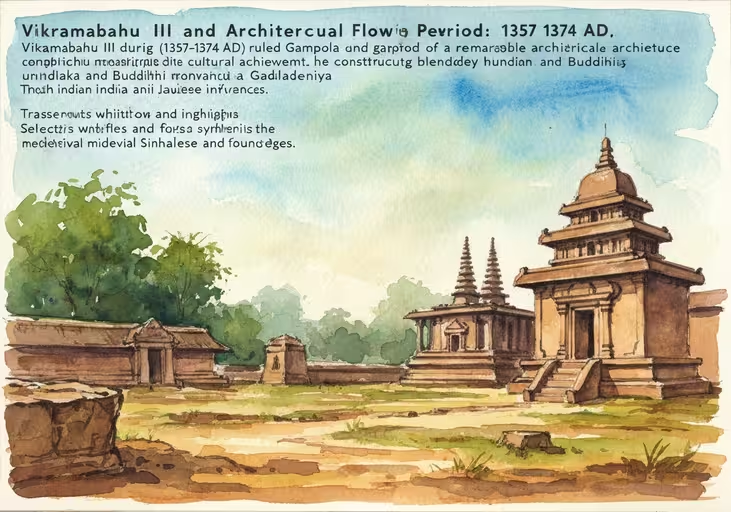
King Vikramabahu III (1357–1374 AD) is one of the most significant rulers of the Gampola period. While his political power was often overshadowed by powerful ministers, his reign left an indelible mark on Sri Lanka’s cultural and architectural landscape.
The Builder King
Vikramabahu III is best remembered as a great patron of the arts and religion. He commissioned the construction of several major temples that stand to this day as testaments to the creativity of the era. The most famous of these are the Lankatilaka Vihara and the Gadaladeniya Vihara.
Architectural Synthesis
The temples built during his reign are unique for their blend of architectural styles. Gadaladeniya, for instance, shows strong South Indian influence, resembling a Hindu shrine in its design, while Lankatilaka is a masterpiece of traditional Sinhalese architecture. This synthesis reflects the multicultural nature of 14th-century Sri Lanka.
The Rise of Alagakkonara
Politically, Vikramabahu III’s reign saw the rise of the powerful minister Alagakkonara. As the king focused on religious works, Alagakkonara took charge of the defense of the kingdom, fortifying the capital of Kotte and successfully repelling invasions by the Arya Chakravarti kings of Jaffna.