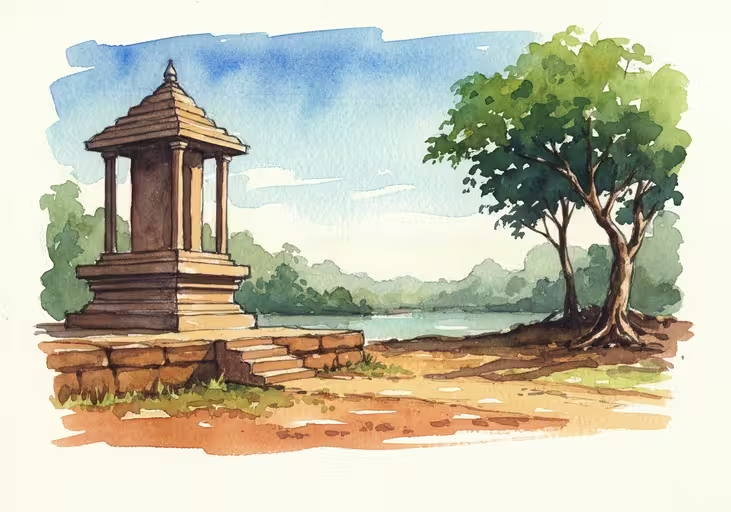
The Gampola Kingdom (1341–1408 AD) represents a significant shift in Sri Lanka’s political geography. As the threat from foreign invaders persisted, the Sinhalese kings moved their capital further into the central highlands, establishing Gampola (Ganga Siri Pura) near the banks of the Mahaweli River.
A Hill Country Capital
Established by King Buwanekabahu IV, Gampola offered natural defenses provided by the surrounding hills and rivers. This move marked the beginning of the “hill country” period of Sri Lankan history, where the rugged terrain was used as a strategic advantage against enemies.
The Temple City
Despite the political instability, the Gampola period was a time of great religious and cultural activity. It is often referred to as the “Temple City” era due to the construction of magnificent temples like Lankatilaka, Gadaladeniya, and Embekka. These structures showcase a unique blend of Sinhalese and South Indian architectural styles, reflecting the cultural exchanges of the time.
A Time of Transition
The Gampola period was also a time of transition. The power of the king was often challenged by powerful chieftains, and the island was fragmented into rival polities. However, it also laid the groundwork for the rise of the Kotte Kingdom, which would eventually unify the island once more.