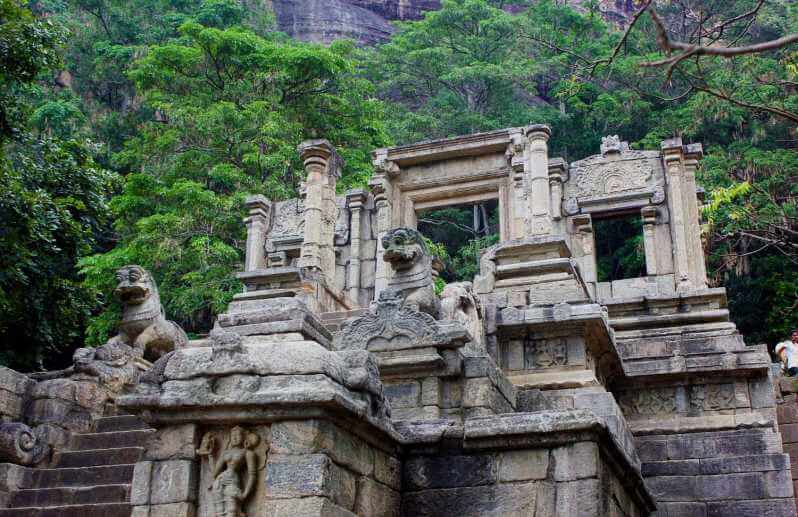
The Dambadeniya Period (1220–1345 AD) represents a time of resilience and rebirth for the Sinhalese kingdom. After the devastating invasion of Kalinga Magha forced the abandonment of the ancient capitals, the center of power shifted to the southwest, finding a secure foothold in the rock fortress of Dambadeniya.
A New Beginning
King Vijayabahu III, the founder of the Dambadeniya dynasty, is credited with gathering the scattered Sinhalese forces and establishing a new base of resistance. He successfully recovered the Sacred Tooth Relic and the Alms Bowl of the Buddha, which had been hidden for safety, and enshrined them in a newly built temple in Dambadeniya, thereby legitimizing his rule.
The Rock Fortress Capital
Dambadeniya was chosen for its strategic defensive capabilities. Situated on a massive rock, the capital was fortified to withstand attacks from foreign invaders. This shift marked a transition from the open cities of the dry zone to the more defensible, hill-country capitals that would characterize the later medieval period.
A Literary Renaissance
Despite the political instability, the Dambadeniya period was a golden age for Sinhala literature. Kings like Parakramabahu II were not only warriors but also scholars. This era saw the production of masterpieces such as the Kavsilumina, Pujavaliya, and Saddharmaratnavaliya, which enriched the cultural heritage of the nation.