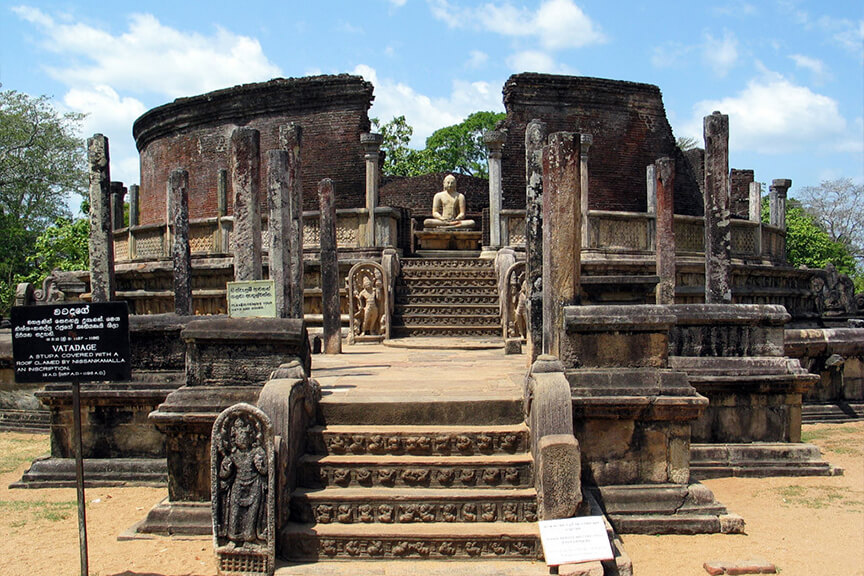
The Chola occupation of Sri Lanka lasted for over seven decades, a dark period for the Sinhalese monarchy. But in the southern stronghold of Ruhuna, a young prince named Kitti (later Vijayabahu I) was preparing to take back his country. His reign (1055–1110 AD) marks one of the greatest comebacks in Sri Lankan history.
The Prince of Ruhuna
Vijayabahu ascended the throne of Ruhuna at a young age, inheriting a fractured kingdom surrounded by enemies. He spent years consolidating his power, defeating rival chieftains, and building an army capable of challenging the mighty Chola Empire. His patience and strategic brilliance earned him the loyalty of the southern people.
The Liberation of Lanka
In 1070 AD, Vijayabahu launched a three-pronged attack on the Chola strongholds. After a grueling campaign, his forces captured Polonnaruwa and Anuradhapura, driving the invaders out of the island. For the first time in 77 years, Sri Lanka was unified under a single Sinhalese monarch.
Rebuilding a Nation
Vijayabahu’s work didn’t end with the war. He moved the capital to Polonnaruwa, recognizing its strategic advantages. He restored the neglected irrigation tanks, revived the Buddhist Sangha by inviting monks from Burma to re-establish the ordination lineage, and ushered in a new era of prosperity and cultural revival.