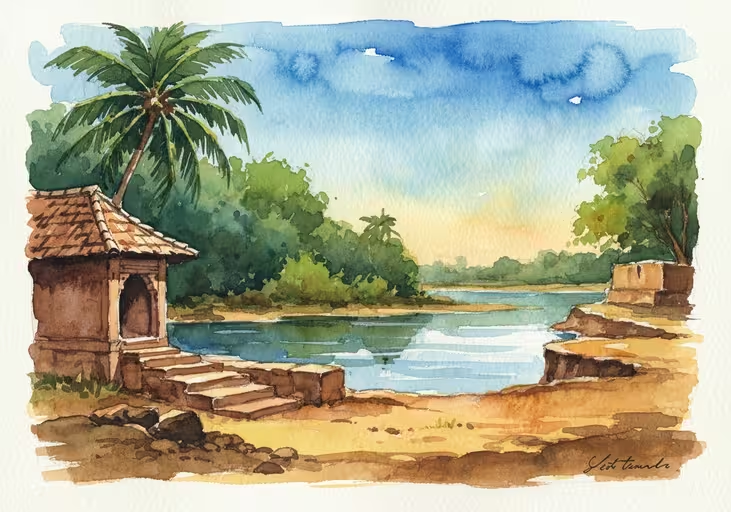
While Christianity in Sri Lanka is often associated with European colonization, historical evidence suggests a much earlier presence. Ancient records and archaeological finds point to a thriving community of Persian Christians living in the capital of Anuradhapura as early as the 1st century AD.
The Cross of Anuradhapura
The most compelling piece of evidence is the Anuradhapura Cross, a granite cross discovered in 1912. Resembling the Nestorian crosses found in South India and Persia, it dates back to the Anuradhapura period. This artifact suggests that a community of Nestorian Christians (Church of the East) lived and worshipped in the heart of the Buddhist kingdom.
The Persian Connection
The 6th-century Greek traveler Cosmas Indicopleustes wrote in his Christian Topography that Taprobane (Sri Lanka) had “a church of Persian Christians who have settled there, and a Presbyter who is appointed from Persia, and a Deacon and a complete ecclesiastical ritual.” These Christians were likely traders and merchants who played a key role in the island’s international commerce.
A Forgotten Chapter
This early Christian community seems to have been a respected minority, living peacefully alongside the Buddhist majority. They served as soldiers and traders, and their presence highlights the cosmopolitan nature of ancient Anuradhapura, a city where East and West met in trade and faith long before the colonial era.