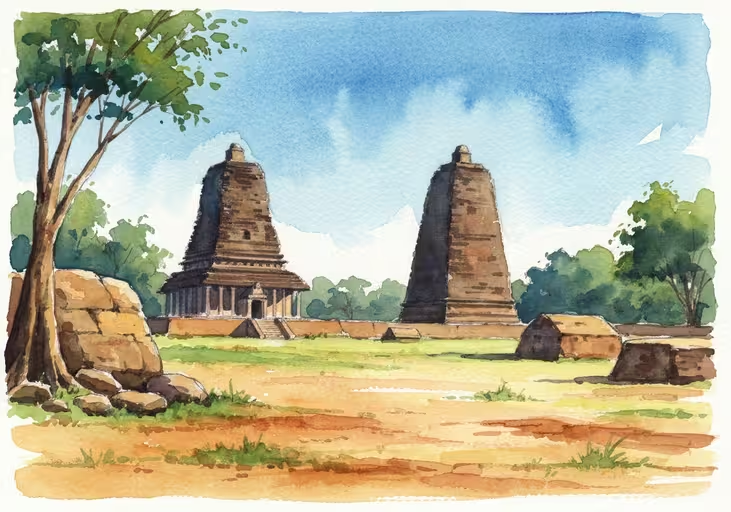
The Abhayagiri Vihara is more than just a stupa; it is a monument to resilience and religious diversity. Built by King Valagamba in the 1st century BC, it stands as one of the most significant architectural and spiritual complexes in the ancient world, second only to the pyramids of Giza in scale during its prime.
A Vow Fulfilled
The story of Abhayagiri begins with a defeat. When King Valagamba was forced to flee his capital by South Indian invaders, a Jain monk named Giri mocked him, shouting, “The great black lion is fleeing!” Stung by the insult, the king vowed to return. Fourteen years later, after reclaiming his throne, he demolished the Jain hermitage and built a massive Buddhist monastery on the site, naming it Abhayagiri—a combination of his own name (Abhaya) and the monk’s (Giri).
A Rival to the Mahavihara
Unlike the orthodox Mahavihara, which strictly adhered to Theravada Buddhism, Abhayagiri was open to new ideas. It welcomed Mahayana and Vajrayana teachings, becoming a vibrant center of intellectual debate. This openness led to a centuries-long rivalry between the two monasteries, shaping the course of Sri Lankan Buddhism.
A Center of Global Learning
At its height, Abhayagiri was home to 5,000 monks and attracted scholars from across the Buddhist world, including the famous Chinese pilgrim Fa-Hien. The complex included advanced hydraulic systems, beautiful moonstones, and the massive Abhayagiri Dagoba, which originally stood over 100 meters tall, dominating the skyline of Anuradhapura.