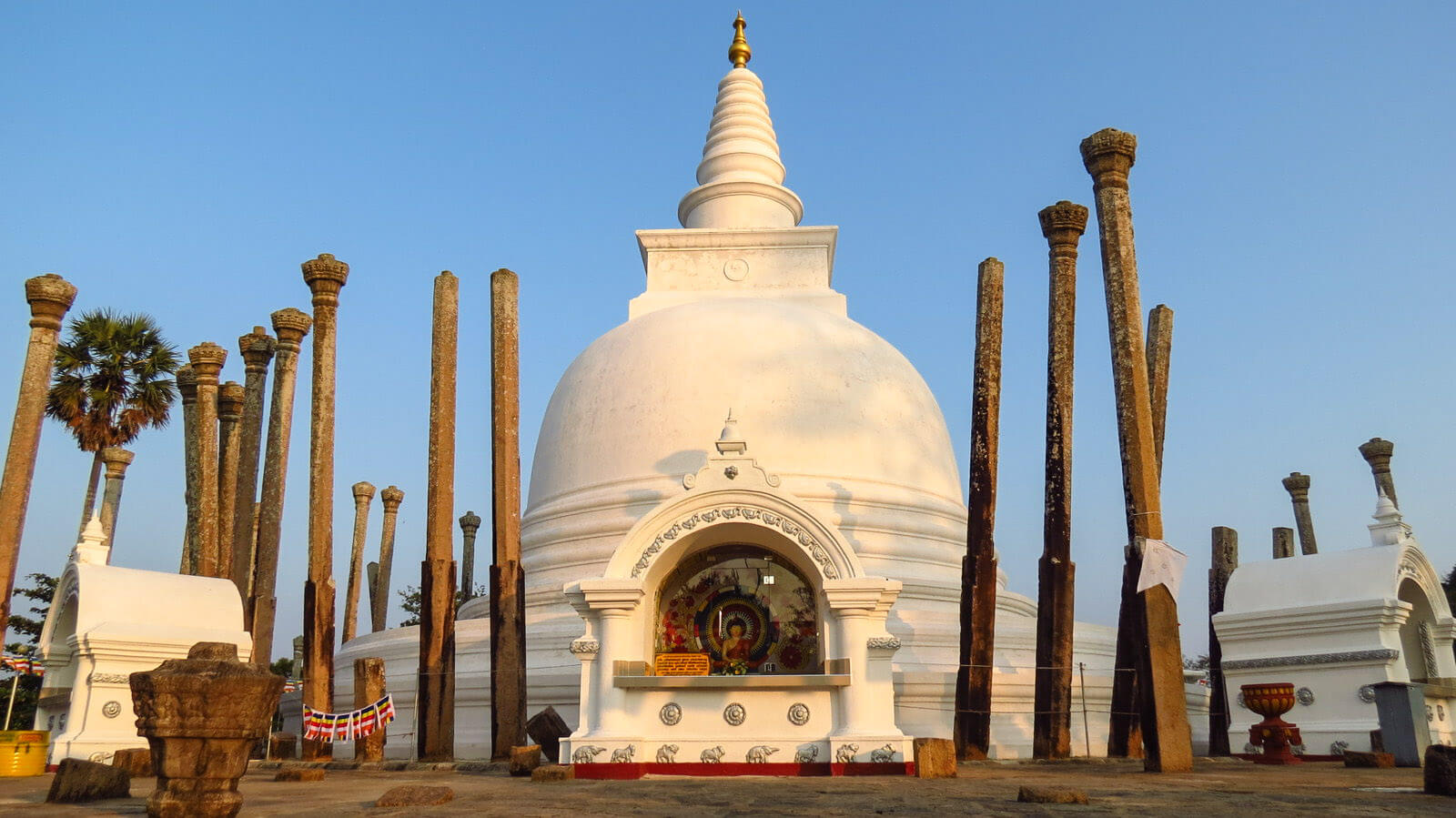
For over 1,300 years, Anuradhapura was the beating heart of Sri Lankan civilization. Established as the capital by King Pandukabhaya in 377 BC, it grew from a small settlement into one of the most sophisticated cities of the ancient world, rivaling the capitals of Rome and China in its grandeur and complexity.
The First Capital
Before Anuradhapura, the island’s rulers governed from smaller, less permanent seats of power. Pandukabhaya changed this by formalizing Anuradhapura as the royal capital. He laid the groundwork for a centralized state that would endure for centuries. The city was strategically located in the fertile dry zone, allowing for the development of a massive hydraulic civilization based on rice cultivation.
A City of Planning
What set Anuradhapura apart was its advanced urban planning. Ancient chronicles describe a city with designated quarters for different trades and communities, including a separate area for foreign merchants (Yonas). It had a sanitary system, cemeteries placed outside the city walls, and a complex water management system that supplied the population and the vast monastic complexes.
The Golden Age
The Early Anuradhapura Period saw the introduction of Buddhism, which transformed the city into a sacred center. Massive stupas like the Ruwanwelisaya and Jetavanaramaya pierced the sky, while the Mahavihara became a beacon of learning. It was a time of immense cultural, religious, and technological achievement that defined the Sinhalese identity.