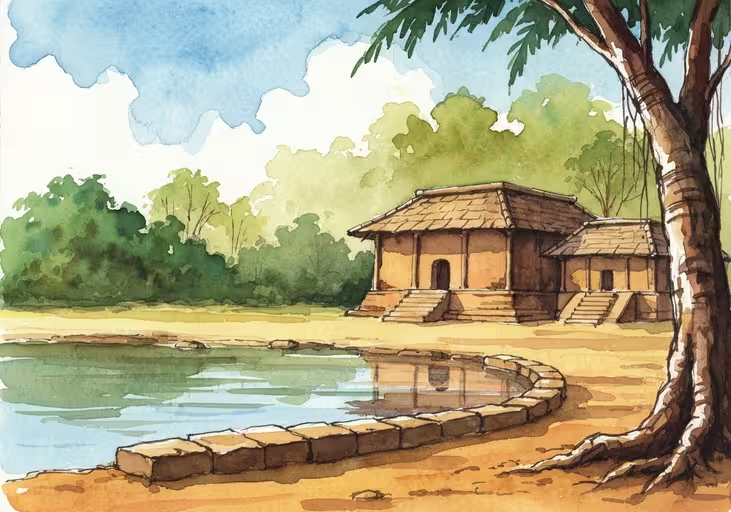
The transition from nomadic hunter-gatherers to settled communities is a defining moment in any civilization. In Sri Lanka, this shift is marked by the appearance of pottery and the establishment of permanent villages, a process that began thousands of years before the arrival of the legendary King Vijaya.
The Clay Craftsmen
Archaeological excavations at sites like Dorawaka-kanda have revealed pottery fragments dating back to 4300 BC. These early ceramics, including Red Ware and Black and Red Ware, show that the island’s inhabitants had mastered the art of firing clay. They used these vessels for cooking, storage, and even burial rituals, indicating a sophisticated domestic life.
The Rise of Settlements
As agriculture took root, people began to settle in one place. By 900 BC, the area around Anuradhapura had already developed into a significant settlement covering over 10 hectares. These early villagers cultivated rice, raised cattle, and engaged in trade. They built wattle-and-daub houses and constructed small village tanks to store water—the precursors to the massive irrigation networks that would later define the civilization.
A Cultural Bridge
The pottery styles found in Sri Lanka from this period show striking similarities to those in South India, suggesting a shared cultural sphere. This “Megalithic” culture bridged the gap between the Stone Age and the Iron Age, laying the social and technological foundations for the great kingdoms that were to come.