The period from 1000 to 500 BC, known as the Protohistoric Iron Age, represents a pivotal transformation in Sri Lanka’s history. It was an era that bridged the gap between the Stone Age hunter-gatherers and the sophisticated hydraulic civilization that would soon emerge. This period is defined by three major developments: the widespread adoption of iron technology, the establishment of settled agricultural communities, and the appearance of the distinctive Megalithic culture.
The Dawn of Iron and Agriculture
The transition from stone to iron tools revolutionized life on the island. Iron axes cleared dense forests for farming, while iron ploughshares turned the hard soil of the dry zone, making large-scale agriculture possible for the first time. This technological leap allowed for the cultivation of rice and other grains, supporting a growing population and leading to the establishment of permanent settlements.
Archaeological evidence suggests that these early communities were not isolated villages but part of a developing social hierarchy. The ability to mine, smelt, and forge iron required specialized skills and organized labor, indicating the emergence of a complex society with distinct social roles.
Megalithic Culture and Burial Customs
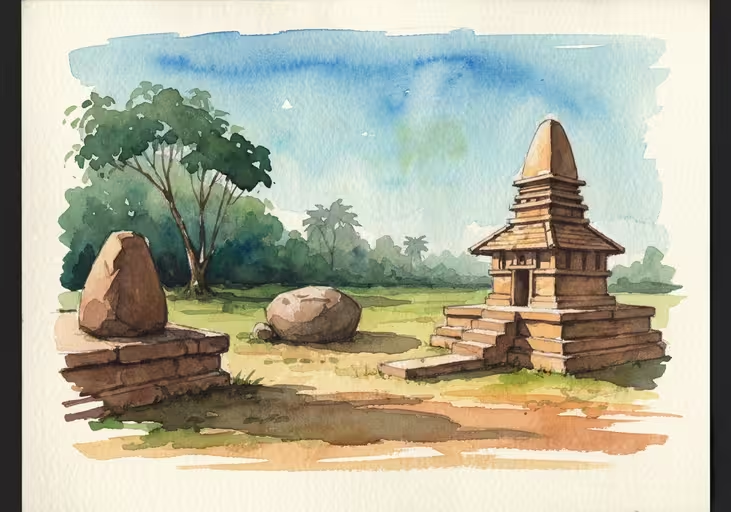
Perhaps the most intriguing aspect of this era is the Megalithic culture, named after the large stone structures (megaliths) used in their burial rites. These people held profound beliefs about the afterlife, evidenced by the care and effort invested in their mortuary practices.
Excavations at sites like Ibbankatuwa, near Dambulla, have revealed extensive burial grounds spreading over acres. Here, the dead were cremated, and their remains were placed in clay urns. These urns were then interred in stone chambers (cists) or covered with stone slabs and earth (cairns).
Inside these tombs, archaeologists have found a wealth of grave goods:
- Black and Red Ware Pottery: High-quality ceramic vessels, fired to be black on the inside and red on the outside, a hallmark of this culture.
- Iron Tools and Weapons: Knives, daggers, and spearheads, signifying the importance of martial strength or hunting.
- Jewelry: Beads made of carnelian, agate, quartz, and glass, some of which were imported, hinting at early trade networks.
Cultural Connections with South India
The material culture of Sri Lanka’s Iron Age shows striking similarities to that of South India. The Black and Red Ware pottery, the specific styles of megalithic burials, and the graffiti marks found on pottery shards are virtually identical to those found in the megalithic sites of Tamil Nadu and other southern Indian states.
This shared cultural complex suggests a period of intense interaction, migration, and cultural exchange across the Palk Strait. Whether through the movement of people or the diffusion of ideas, Sri Lanka was part of a broader regional culture that spanned the southern tip of the Indian subcontinent.
Legacy
The Protohistoric Iron Age laid the necessary groundwork for the Early Historic period that followed. The settlements established during this time, such as Anuradhapura, would grow into the great capitals of ancient Sri Lanka. The tank-based irrigation systems, which would later become the marvel of the ancient world, likely had their humble beginnings in the small village tanks constructed by these early iron-using farmers.
Far from being a “dark age,” this period was the crucible in which the essential elements of Sri Lankan civilization—agriculture, technology, and social organization—were forged.