Introduction
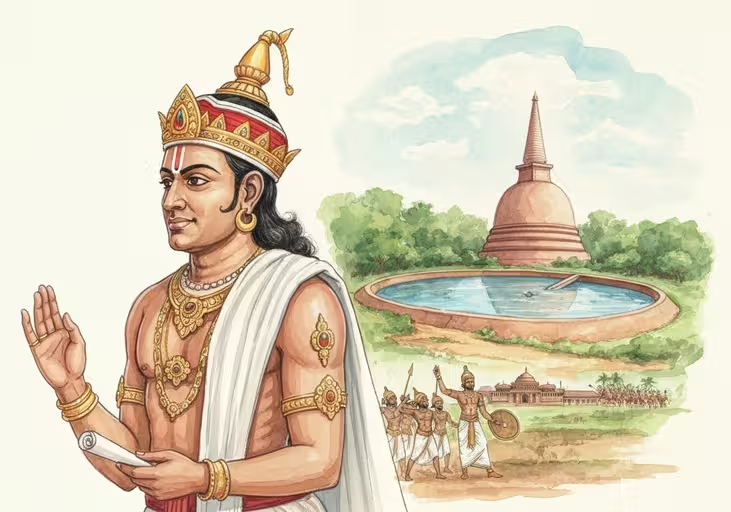
King Vikramabahu I (CE 1111-1132) was an important ruler who reigned during the medieval period of Sri Lanka. He was the son of King Vijayabahu I and Queen Tilokasundari, a Kalinga princess. His reign was marked by internal conflicts, foreign invasions, and harsh governance.
Early Life and Accession to the Throne
King Vikramabahu I served as “Mapa” (Maha Arya Pada or prince successor) in the Ruhunu region during the reign of King Jayabahu I. After the demise of King Jayabahu I, he had to face a severe struggle to ascend the throne. His aunt, Mitta Devi, sister of King Vijayabahu I, conspired to secure the throne for her son, which led to numerous conflicts in the country. However, this conspiracy failed, and while Mitta Devi and her sons fled the country, the throne was eventually inherited by King Vikramabahu, the rightful heir.
Reign and Challenges
The reign of King Vikramabahu I was an era filled with challenges. During his rule, a foreigner named Veeradeva invaded Lanka, and he had to face a war against this invader.
Domestically, King Vikramabahu and his brothers had to govern various provinces, and their rule was very harsh. They oppressed the people and levied excessive taxes. Initially, King Vikramabahu expelled the Buddhist monks from the viharas, considering them disloyal. Furthermore, these vihara buildings were converted into military barracks. The rulers and their officials were also prone to plundering the wealth of the inhabitants.
Development Works and Legacy
This era was a period of internal turmoil, and no development work took place. Under King Vikramabahu’s rule, the people of the country suffered greatly, and his reign is not considered a particularly favorable era in the history of Sri Lanka. He ruled until CE 1132.