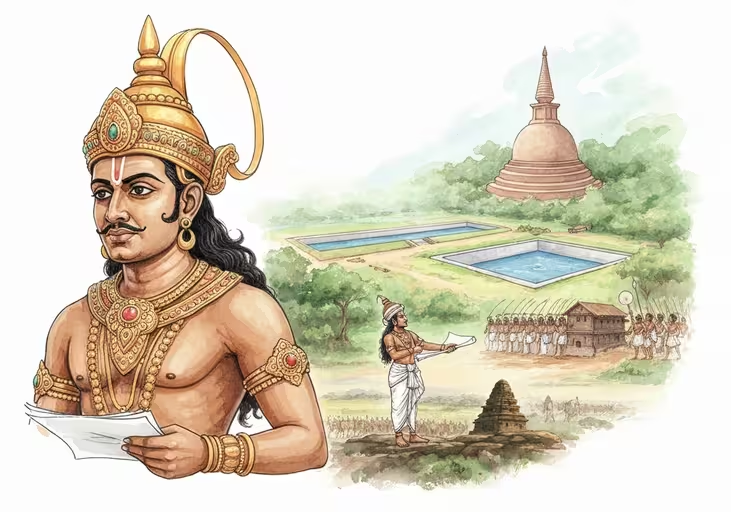
King Vijaya is considered the first king of Lanka according to the Mahavamsa and the legendary leader of the Sinhala nation. The Mahavamsa states that his arrival took place in 543 BCE, on the very day of the Parinirvana of the Buddha.
Birth and Early History
According to the Mahavamsa, Vijaya was born in Sinhapura, India, as the eldest son of King Sinhabahu and Queen Sinhasivali. The legend states that his father, Sinhabahu, was the son born of a lion and a Kalinga royal princess.
Vijaya and his 700 followers were exiled due to unrest in the kingdom, and were eventually sent away on a ship. After sailing across the sea, they arrived in the Tambapanni region of Lanka.
Arrival in Lanka
Vijaya and his 700 followers first landed on the eastern coast of Lanka in 543 BCE, on the very day of the Parinirvana of the Buddha. According to the Mahavamsa, the Buddha made a prophecy to the devas (celestial beings) about Vijaya’s arrival, stating that Vijaya and his followers would establish a glorious future for Buddhism.
Encounter with Kuveni
Upon landing, Vijaya encountered a Yakkhini (demoness) queen named Kuveni. She is described as a leader of the island’s indigenous people (Yakkhas and Nagas). Kuveni helped Vijaya conquer the island, and they married and had two children – Jivahatta and Disala.
Establishment of the Tambapanni Kingdom
Vijaya established his first kingdom in the region called Tambapanni. This became the first Sinhala kingdom in Lanka. Vijaya strengthened his government, established an administrative structure, and ruled various parts of the island.
Marriage to a Pandyan Princess
Later, when King Vijaya became concerned about not having an heir, he abandoned Kuveni and married a princess from the Pandyan kingdom in South India. Similarly, he arranged for women for his 700 followers as well.
Kuveni and her children were banished, and it is said that they subsequently went into the forest and became the ancestors of the Veddha people.
Legacy
As Vijaya had no sons, his nephew, Upatissa, took over the kingship after his death. Subsequently, Panduvasudeva, Vijaya’s brother’s son, arrived from India and ascended to the throne.
Vijaya’s arrival is considered a pivotal moment in Sri Lankan history and marks the genesis of the Sinhala nation. The Vijaya dynasty he founded ruled Lanka for centuries and paved the way for the great kings of the Anuradhapura era.
Significance in the Mahavamsa
Vijaya’s story is a crucial part of the Mahavamsa, linking the origin of the Sinhala nation with the prophecy of Buddhism’s future in Lanka. His arrival coinciding with the Parinirvana of the Buddha holds special significance in Sri Lankan Buddhist tradition.
Today, King Vijaya is regarded as a symbol of Sinhala national identity, and his story remains an indispensable part of Sri Lankan culture and history.