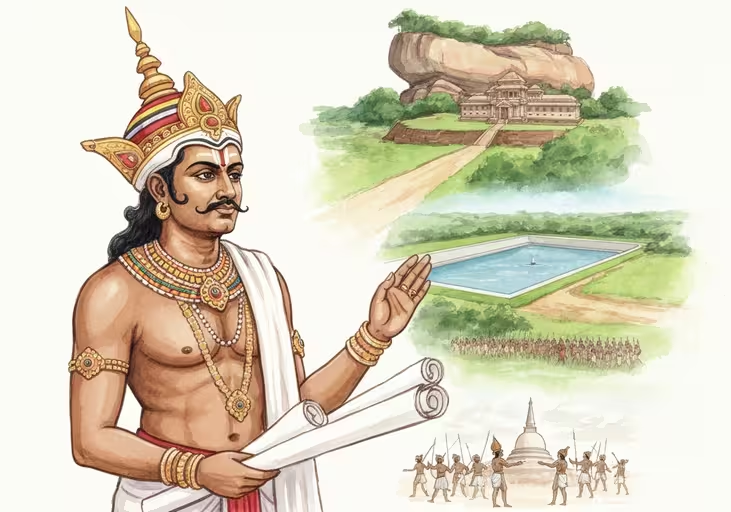
King Sri Vikrama Rajasinha
Introduction
King Sri Vikrama Rajasinha (born Kannasamy) was the last king of Sri Lanka before the kingdom fell to the British. He was also the last ruler belonging to the Nayakkar Dynasty of Sinhala. Ascending the throne in 1798, he was defeated and deposed by the British at the end of the Kandyan War.
Early Life and Accession to the Throne
Of South Indian Telugu descent, he was the son of the sister of Upendramma, the queen consort of King Sri Rajadhi Rajasinghe. Named Kannasamy, he chose the name Sri Vikrama Rajasinha for his coronation when he ascended the throne in 1798. He was crowned king of the Kandyan Kingdom at the age of 18.
Although Queen Upendramma’s brother had a greater claim to the throne after Rajadhi Rajasinghe, the then Prime Minister, Pilimatalawwe, chose the South Indian prince to be king. It is reported that he did so with a grand plan in mind to usurp the throne and establish his own new royal lineage. After becoming king, the young monarch faced numerous conspiracies.
Reign and Internal Conflicts
During the reign of King Sri Vikrama Rajasinha, the British, who had seized power in the coastal regions after the Dutch, initially did not interfere in the political affairs of the Kandyan Kingdom. However, Prime Minister Pilimatalawwe maintained secret agreements with the British, subtly inciting the king to create conflicts against them. He hoped this would provide a legitimate reason for the British to annex the Kandyan Kingdom.
After having been pardoned twice before for his treasonous acts, Pilimatalawwe committed the same offense a third time, forcing the king to execute him. Subsequently, Ehelepola, Pilimatalawwe’s nephew, was appointed as the new Prime Minister (First Adigar). After the king suppressed a rebellion organized by Ehelepola, he fled to Colombo and allied himself with the British. Although the king ordered him to surrender, he did not comply even after three weeks. Enraged, the king ordered the execution of his entire family. Details of this punishment spread throughout the country, but the accuracy of this information is noted as questionable.
British Intervention and Exile
At this juncture, British forces marched towards Kandy, receiving assistance from the populace who anticipated the king’s removal from power. The king was taken into custody and transported as a royal prisoner to Vellore Fort in Madras. The rest of the royal family was also exiled with him. The king lived on a small allowance granted by the British government to him and his two queens. This allowance continued to be paid to his relatives even after the king’s death. It was paid for 133 years until Sri Lanka gained independence in 1948, at which point the payments were stopped.
Legacy
King Sri Vikrama Rajasinha is recorded in history as the ruler who marked the end of Sri Lanka’s centuries-long independent monarchy. His reign signifies a crucial turning point in Sri Lankan history.