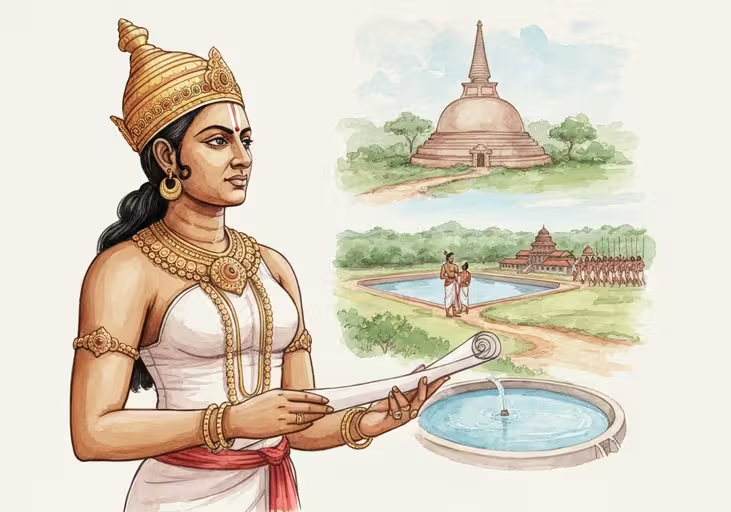
Queen Seevali is recorded in history as the second queen in the Sinhala monarchy. She was a ruler who governed the Anuradhapura Kingdom. Although her reign was limited to a few months, her presence marks an important historical milestone.
Early Life and Lineage
Princess Seevali was born into a royal family of the Anuradhapura Kingdom. Her father was King Maha Daṭhika Mahānāga. Seevali was the younger sister of King Chulabhaya, thus inheriting a royal lineage. This royal background paved the way for her later ascension to the throne.
Ascension to the Throne and Brief Reign
Seevali ascended to the throne as the second queen in the Sinhala monarchy. She was one of the rare women who took charge of ruling the Sinhala land. However, her reign was very short. According to historical records, she held the throne for only a few months. This brief period of rule suggests that various challenges existed regarding the political stability of the kingdom.
Loss of the Throne
Queen Seevali’s short reign ended with her dethronement by King Illanaga. With King Illanaga’s rise to power, Queen Seevali had to depart from the Sinhala kingdom. This event illustrates the power struggles and revolutionary political nature prevalent in the Anuradhapura Kingdom.
Legacy
Although Queen Seevali’s reign was very short, her name is recorded as the second queen in the Sinhala monarchy. Her story provides important evidence of the power struggles and competition for the throne during the Anuradhapura era. The rare opportunity she had to participate in governance as a woman further highlights her historical significance.