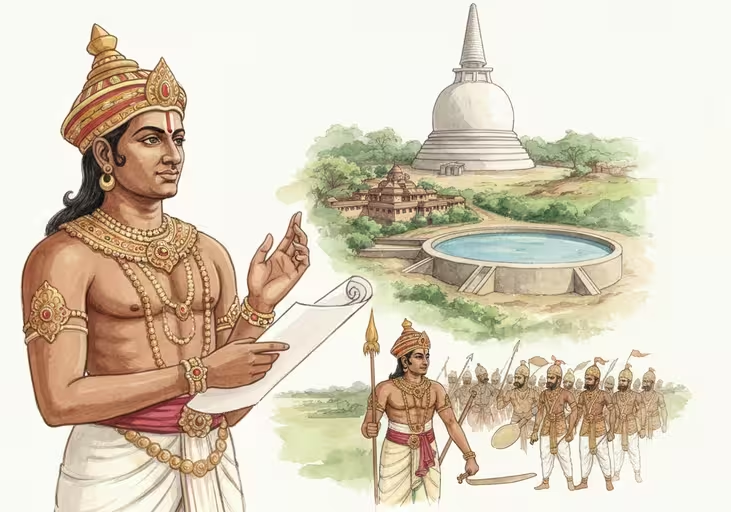
King Parakramabahu VI
Introduction
King Parakramabahu VI is a prominent figure in Sri Lankan history. He is known as the last native king to successfully unify Sri Lanka in the 15th century. During his reign, the Kotte Kingdom experienced its golden age, flourishing with its center located in Sri Jayawardenepura Kotte, slightly outside present-day Colombo.
Establishment of the Kotte Kingdom
Kotte Fort was first established by Minister Alakeshwara (1370–1385) of the Gampola Kingdom. During the reign of King Vikramabahu III, this fort was constructed with the aim of neutralizing attacks by northern invaders along the western coast. Due to the vast marshland surrounding the area, it was naturally well-protected. Later, in 1412 CE, King Parakramabahu VI chose this strategically located fort as his capital.
The Reign of King Parakramabahu VI
King Parakramabahu VI ruled the Kotte Kingdom from 1412 to 1467 CE. Under his rule, Kotte flourished, and he succeeded in extending his dominion throughout Sri Lanka. For this reason, he is remembered in history as the last native king to unify the island. His era is also considered a golden age of Sinhala literature.
Etymology
In the Sinhala language, the term ‘Kotte’ means (fort)ress. Therefore, it is generally accepted that this name refers to the fort originally built by Alakeshwara. With King Parakramabahu VI choosing it as his capital, this fort became the center of the kingdom.
Legacy
The legacy bestowed upon Sri Lanka by King Parakramabahu VI is immense. He not only unified the island but also led the Kotte Kingdom to great economic and cultural prosperity. His reign marks a significant milestone in Sri Lankan history.