Introduction
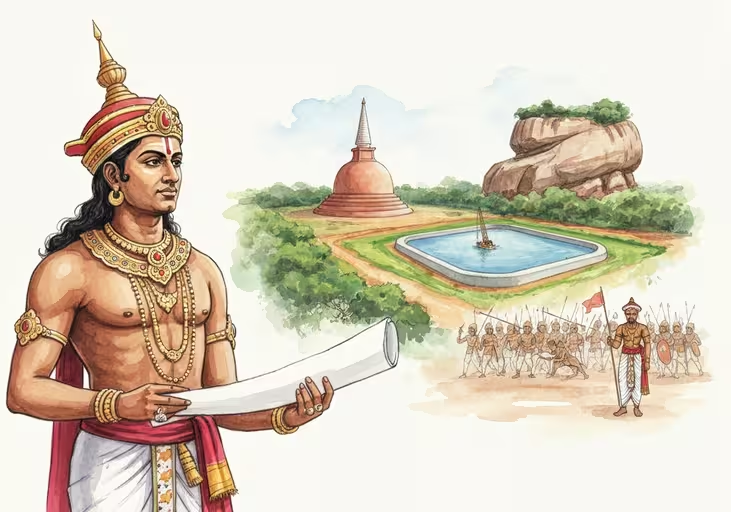
King Gajabahu II was an important Sri Lankan ruler who governed the Rajarata region in the 12th century CE. He reigned from 1131 CE to 1153 CE. His reign represents the early phase of the Polonnaruwa era, and a significant shift in power in Sri Lankan history occurred during his time as king.
Early Life and Accession to the Throne
King Gajabahu II was the son of King Vikramabahu I. He succeeded his father to the throne of Rajarata, thereby maintaining the continuity of the royal lineage. With his accession, the state administration centered in Rajarata continued to progress.
Reign (1131-1153 CE)
King Gajabahu II ruled the Rajarata region for a period of 22 years. Although detailed information about the internal affairs and developments of the kingdom during his reign is not extensively recorded in sources, it is believed that he attempted to govern the country peacefully and stably. At that time, Rajarata was the island’s primary economic, political, and cultural center.
Loss of Power and End of Reign
The reign of King Gajabahu II ended due to a powerful political challenge. King Parakramabahu I defeated King Gajabahu II and ascended to the throne. This event was a significant turning point in Sri Lankan history, marking the rise of Parakramabahu I, who is later considered a great ruler.
Legacy
The reign of King Gajabahu II is an important marker of the continuity of the royal lineage and the transfer of power during the Polonnaruwa era. Although his rule was brief, it is recorded as part of Sri Lanka’s royal history. He holds an important place in history as a representative of the kingship that existed before the rise of powerful rulers like Parakramabahu I.