Introduction
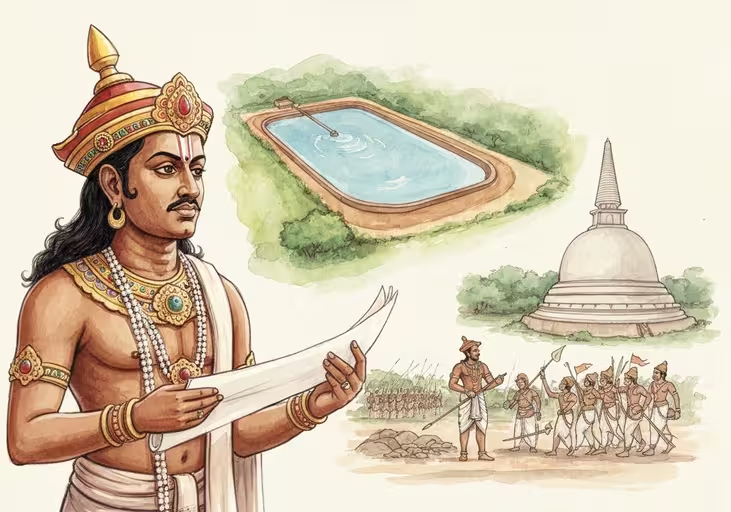
King Buvanekabahu II was an important ruler of Sri Lanka who ascended the throne in 1292 CE with Yapahuwa as his capital. He gained royal power by defeating King Parakramabahu III. This king was also known as Sri Nivasa Buvanekabahu. A major event during his reign was the relocation of the kingdom’s capital from Yapahuwa to Kurunegala.
Accession and Reign
Prince Buvanekabahu II ascended the throne in 1292 CE with Yapahuwa as his capital, after defeating King Parakramabahu III. After ruling from Yapahuwa for about 7 years, this king later chose Kurunegala as the new capital of his kingdom in 1300 CE. He remained in power for approximately ten years until 1302 CE.
Relocation of the Capital
In the tradition of relocating capitals in Sri Lankan history, the name of King Buvanekabahu II stands out prominently. King Buvanekabahu I had moved the capital from Dambadeniya to Yapahuwa. Similarly, King Buvanekabahu II moved his kingdom from the fortress of Yapahuwa to Kurunegala in 1300 CE. This relocation of the capital was one of the most important strategic decisions of his reign.
End of Reign and Succession
King Buvanekabahu II ended his reign in 1302 CE. He was succeeded by his son, King Parakramabahu IV. This helped maintain the continuity of rule during the Dambadeniya - Yapahuwa - Kurunegala Era.
Legacy
The reign of King Buvanekabahu II marks an important milestone in the history of the Southwestern Kingdoms. His main contributions are considered to be his ascension to the throne after defeating King Parakramabahu III, a successful reign of ten years, and especially the relocation of the capital from Yapahuwa to Kurunegala. His reign testifies to the political and geographical changes in Sri Lanka.